Hot air welding technology utilizes specialized hot air welding machines that deliver controlled heated air at temperatures ranging from 700°F to 1,350°F combined with targeted pressure to create molecular bonds between thermoplastic materials. These advanced machines are central to the hot air welding technology process, enabling the formation of airtight, waterproof seams that often exceed the strength of the parent material itself.
This technology provides a comprehensive solution for thermoplastic joining, featuring various machine types and automation levels tailored to industry needs. Designed for professionals like manufacturing engineers and contractors, hot air welding machines improve production efficiency, weld quality, and long-term durability. Proper machine selection is essential to avoid issues such as inconsistent seam width, human error, and reduced product quality.
Belangrijkste punten over lasapparaten en -technologie met hete lucht
- Een nauwkeurige regeling van de temperatuur, druk en snelheid is essentieel voor het verkrijgen van sterke, consistente lasnaden in thermoplastische materialen.
- Er zijn diverse machinetypes beschikbaar – van handbediende tot volautomatische modellen – die op maat gemaakte mogelijkheden bieden voor verschillende productievolumes en toepassingen.
- Automatisering verhoogt de lasefficiëntie, vermindert menselijke fouten en zorgt voor een gelijkmatige lasnaadkwaliteit, wat garant staat voor prestaties op de lange termijn.
- De juiste keuze van machines en goed onderhoud zijn van cruciaal belang voor het realiseren van betrouwbare, duurzame en luchtdichte naden in uiteenlopende industriële toepassingen.
Wat is heteluchtlassen?
Hot air welding machines are precision equipment that create molecular bonds in thermoplastic materials through controlled application of heat and pressure. This welding process fundamentally differs from traditional metal welding by using heated air rather than electric arcs to achieve material bonding.
The core process involves directing a stream of heated air to the interface between two pieces of thermoplastic material. This heat softens the material surfaces until their molecular structure becomes mobile. Pressure rollers or manual application then compresses these softened surfaces together, creating bonds that form an airtight, waterproof seam.
This technology matters because it produces professional results without adhesives, solvents, or mechanical fasteners. The resulting joints demonstrate superior durability and can withstand demanding environmental conditions across many applications. For a step-by-step look at the process, see our guide to how hot air welding works.
Belangrijkste onderdelen en werking
De verwarmingselementen zorgen voor een nauwkeurige temperatuurregeling, wat essentieel is voor een consistent lasresultaat bij verschillende materialen en diktes. De luchttoevoersystemen zijn voorzien van persluchtmechanismen die verwarmde lucht via speciale spuitmonden richten voor een gerichte toepassing. Tot de druktoepassingsmechanismen behoren gemotoriseerde rollen of handgereedschap die zorgen voor een gelijkmatig contact tijdens het lasproces.
Deze componenten werken samen om de nauwkeurige temperatuur- en drukregeling te realiseren die cruciaal is voor kwalitatief hoogwaardige lasnaden. Moderne machines zijn uitgerust met digitale bedieningselementen die giswerk overbodig maken en menselijke fouten bij het instellen van optimale lasparameters verminderen.
Temperatuur- en drukregelsystemen
Advanced control systems feature programmable settings that store optimized parameters for different thermoplastic materials including polyurethane, PVC, and TPO membranes. Temperature monitoring ensures consistent heat application while pressure regulation maintains uniform seam formation.
Automatic welders with digital controls can achieve efficiency levels impossible with purely manual processes while maintaining the ability to adjust parameters for specific manufacturing requirements.
Soorten heteluchtlasapparaten
Handbediende heteluchtlasbranders
Handheld hot air welders are portable tools with variable temperature and airflow controls for detail work, field repairs, complex geometries and tight spaces. Miller Weldmaster’s EliteAir Industrial hot air welder weighs 2.4 lb (1.1 kg), reaches up to 1,202°F (650°C) and runs on 120–220 VAC for in-house or in-the-field repairs of industrial fabrics such as tarps, signs, inflatables, geomembranes and tension structures.
Manual hot air welders excel in applications requiring operator precision and flexibility. Their portability makes them ideal for on-site installation work and repair jobs where larger equipment cannot reach. However, the manual process requires skilled workers to maintain consistent speed and pressure for uniform results.
Semi-automatische lassystemen
These systems combine motorized movement with operator control, delivering consistent speed settings while maintaining manual oversight capabilities. The automation eliminates inconsistencies in travel speed while allowing workers to adjust pressure and monitor weld quality in real-time.
Unlike handheld units, semi-automatic machines provide enhanced consistency through mechanized movement control. This approach benefits medium-volume production requiring a balance of flexibility and repeatability without the complexity of fully automated systems.
Miller Weldmaster’s entry-level machines weld at 8–14 m/min; its standard full-size machines store recipes for quick setting recall and weld at up to 35 m/min. The T300 Flex, its most universal welder, combines hot air and hot wedge welding with an array of seam types at up to 30 m/min (100 ft/min).
Automatische lasmachines
Fully automated systems feature programmable controls and high production efficiency. These purpose built machines store welding recipes for different materials and automatically adjust temperature, pressure, and speed settings.
Mass manufacturing applications benefit from reduced operator error and precise temperature and alignment control. The automation level achieves consistent seam width and eliminates variations that can lead to quality issues in high-volume production.
Miller Weldmaster’s automated welding machines are custom built. They can weld multiple rolls of material at once and combine welding with gluing, sewing, grommeting, printing, visual inspection and cutting, controlled from a PLC touch screen with recipe storage; the Moduline System, for example, automates tarp and cover production. Miller Weldmaster reports that most of its automation customers see a return on investment in under two years.
Gespecialiseerde apparatuur
Some hot air welders are built for one product family. Miller Weldmaster’s specialized machines include the TG3600 for geomembrane liners and covers, the FX100 for flexible reinforced ducting and tubing, the BT2000 for flexible storage tanks and bladders, the HG50 banner finishing machine, which welds, grommets and cuts in a single station, and the Calibration Tube System for cured-in-place pipe. These specialized systems address specific industry requirements that general-purpose machines cannot efficiently handle.
Industriële toepassingen en keuzegids voor heteluchtlasapparaten
Building on the machine types available, successful implementation requires aligning each machine’s capabilities with the specific demands of your production environment. This includes evaluating how well the equipment supports your materials, workflow, and workplace conditions to ensure long-term performance.
Stap voor stap: het selectieproces voor een heteluchtlasapparaat
Step 1 — Material Compatibility Assessment
Bepaal welke soorten thermoplasten, diktebereiken en temperatuurvereisten voor uw materialen van toepassing zijn. Test lasverbindingen bij verschillende temperatuurinstellingen om de compatibiliteit te controleren voordat u tot de aanschaf van apparatuur overgaat.
Step 2 — Production Volume Analysis
Ga na of handmatige, halfautomatische of automatische systemen het beste aansluiten bij uw productiecapaciteit. Houd daarbij rekening met zowel de huidige capaciteit als toekomstige uitbreidingsbehoeften.
Step 3 — Workplace Requirements Evaluation
Beoordeel de behoeften op het gebied van verplaatsbaarheid, de beschikbare stroomvoorziening, de toegang tot perslucht en de beperkingen van de werkruimte. Houd rekening met de veiligheidseisen en de opleidingsmogelijkheden voor uw team.
Step 4 — Feature Prioritization
Kies de benodigde bedieningselementen, spuitmondopties en het automatiseringsniveau op basis van uw kwaliteitsnormen en efficiëntiedoelstellingen. Houd rekening met de serviceondersteuning en de beschikbaarheid van reserveonderdelen bij de fabrikanten.
Vergelijking van heteluchtlasapparaten: handmatige versus automatische systemen
De keuze tussen handmatige en automatische systemen hangt af van de vereisten op het gebied van productievolume en de behoefte aan een constante kwaliteit. Handmatige systemen bieden flexibiliteit en lagere aanschafkosten, maar vereisen bekwame operators om professionele resultaten te behalen. Automatische systemen bieden een superieure efficiëntie en sluiten menselijke fouten uit, maar vergen een grotere kapitaalinvestering en doorlopend onderhoud.
Zelfs bij een juiste keuze van de apparatuur worden operators vaak geconfronteerd met uitdagingen die van invloed zijn op de laskwaliteit en de productie-efficiëntie.
| Functie | Handmatig proces | Automatische lassers |
| Productiesnelheid | Depends on the operator | Up to 35 m/min (115 ft/min) on Miller Weldmaster full-size machines |
| Initiële investering | Lowest (handheld tools) | Higher; fully automated systems are custom built |
| Vereiste vaardigheden van de operator | Er is veel expertise vereist | Een basisopleiding is voldoende |
| Consistentie | Variabel, afhankelijk van de vaardigheden van de werknemer | Consistente resultaten dankzij digitale bediening |
| Onderhoudsbehoeften | Minimale, basisreiniging | Regular calibration and component replacement |
Veelvoorkomende uitdagingen en oplossingen bij het hete-luchtlasproces
Inzicht in veelvoorkomende operationele problemen helpt om een constante kwaliteit te waarborgen en de prestaties van de apparatuur gedurende het hele productieproces te optimaliseren.
Uitdaging 1: Wisselende laskwaliteit
Oplossing: Implementeer digitale temperatuurregelaars met opslagmogelijkheden en zet uitgebreide opleidingsprogramma’s voor uw team op.
Kalibratieprocedures moeten regelmatig worden uitgevoerd om de nauwkeurigheid van de temperatuur te waarborgen, terwijl protocollen voor kwaliteitsbewaking helpen afwijkingen op te sporen voordat deze de productie beïnvloeden. Het vaststellen van gestandaardiseerde lasprocedures vermindert variabiliteit en verbetert de algehele kwaliteit bij verschillende operators en ploegen.
Uitdaging 2: Problemen met de compatibiliteit van materialen
Oplossing: Controleer de temperatuurbereiken voor specifieke thermoplastische materialen, kies de juiste spuitmonden op basis van de materiaaldikte en voer proeflassen uit voordat u met de volledige productie begint.
Materiaalspecificaties verschillen aanzienlijk per fabrikant, waardoor de lasparameters voor elke nieuwe materiaalbron moeten worden gevalideerd. Compatibiliteitstabellen bieden houvast bij het instellen van de begininstellingen, maar daadwerkelijke proeflassen leveren de meest betrouwbare bevestiging van de optimale parameters.
Uitdaging 3: Onderhoud van apparatuur en stilstand
Oplossing: Stel schema’s voor preventief onderhoud op en zorg voor voldoende reserveonderdelen om productieonderbrekingen tot een minimum te beperken.
Regelmatige reinigingsprocedures voorkomen dat er zich materiaal ophoopt, wat de warmteoverdracht en de luchtstroom kan belemmeren. Schema’s voor het vervangen van onderdelen op basis van gebruiksuren helpen onverwachte storingen te voorkomen die kunnen leiden tot kostbare stilstand en vertraagde leveringen.
Toepassingen van heteluchtlasapparaten en -technologie
Hot air welding machines and hot air welding technology play a vital role across a wide range of industries and product applications where strong, durable, and airtight seams are essential. Their ability to create seamless bonds in thermoplastic materials makes them ideal for manufacturing products that require high performance and long-term durability. Whether in factory settings or on-site installations, these machines provide efficient and reliable solutions for joining sheets, membranes, and coated fabrics.
Common applications include industrial fabric fabrication, roofing membrane installation, and the production of inflatables and tarpaulins. The versatility of hot air welding technology allows it to accommodate various material thicknesses and seam widths, making it suitable for both small detail work and large-scale manufacturing processes. Additionally, portable hot air welders enable field repairs and maintenance, extending the usability of products and reducing downtime.
Gebruikscases
- Tarpaulins, covers and truck side curtains
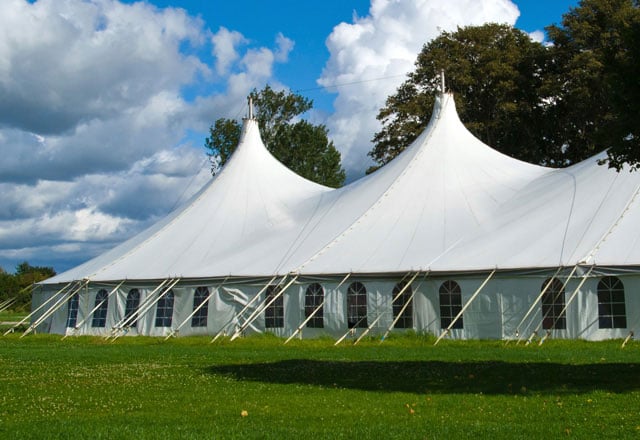
- Tents, shelters, structures and clear span buildings
- Banners, signs and billboards
- Awnings, shades, tension structures and pergolas
- Pool covers and pools
- Geomembrane liners and roofing membranes
- Flexible storage tanks and bladders
- Flexible ducting and tubes
- Inflatables, evacuation slides and containment booms
- Cured-in-place pipe and filtration tubes
- Agricultural and gym curtains, roller doors, mattresses and athletic mats
- On-site repairs with handheld welders
Kies Miller Weldmaster al uw behoeften op het gebied van heteluchtlasapparatuur
Heteluchtlasapparaten van Miller Weldmaster veelzijdige oplossingen voor het verbinden van thermoplasten, mits ze op de juiste wijze worden gekozen en gebruikt. De geavanceerde technologie Miller Weldmasterbiedt aanzienlijke voordelen bij het creëren van duurzame, luchtdichte verbindingen zonder lijm of oplosmiddelen, waardoor deze apparaten onmisbaar zijn voor sectoren waar betrouwbare lasverbindingen van cruciaal belang zijn.
Aan de slag met Miller Weldmaster
- Step 1: Define Your Requirements
Assess your material requirements and production volume needs with Miller Weldmaster’s expert guidance. - Step 2: Evaluate Your Workspace
Evaluate workspace constraints and automation benefits tailored to your application by Miller Weldmaster specialists. - Step 3: Connect with an Expert
Contact Miller Weldmaster equipment experts to discuss specific machine capabilities, request demonstrations, and receive personalized support to optimize your welding process.

 MEER WETEN