Acrylic fabric bonding is an industrial process that joins acrylic canvas, awning, and marine fabrics using heat-activated adhesive tape — creating seams that are stronger, more durable, and leak-resistant compared to traditional sewing.
Miller Weldmaster alle fasen van het lasproces: hoe acrylweefsel zich onder invloed van warmte gedraagt, welke lasmethode het beste bij uw productievolume past, hoe gelaste naden zich verhouden tot genaaide alternatieven, en hoe u de meest voorkomende lasfouten kunt voorkomen. Of u nu een kleine markiezenwinkel runt of een productielijn met grote volumes, de informatie hier is direct van toepassing op uw aankoopbeslissing.
Acrylic fabric cannot be thermoplastic-welded like PVC because it does not melt and re-fuse — bonding with heat-activated adhesive tape is required instead.
Hot air, hot wedge and impulse welding methods can all activate acrylic bonding tape to create strong, durable seams.
Naadverbindingen van acryl voorkomen dat de draad vervaagt, er gaatjes ontstaan door de naald en de draad snel verslijt — de drie meest voorkomende zwakke punten bij het naaien van acrylcanvas.
Procesregeling — temperatuur, druk en machinesnelheid — is de belangrijkste factor voor de naadsterkte en de consistentie in productieomgevingen.
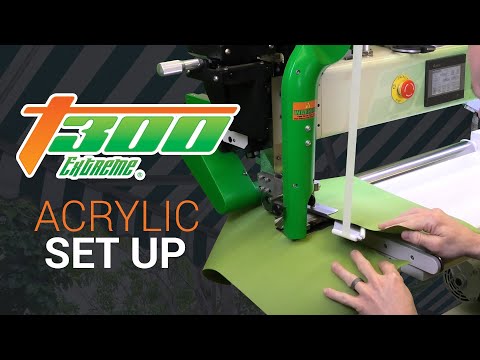
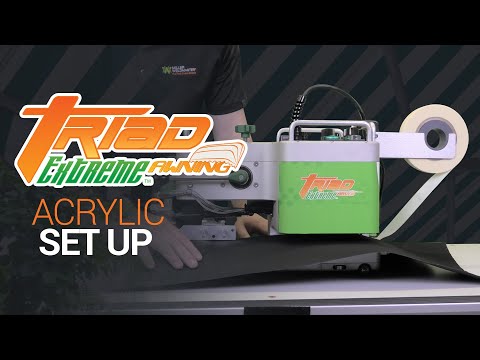
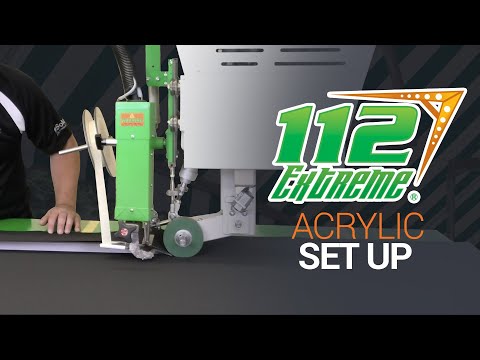
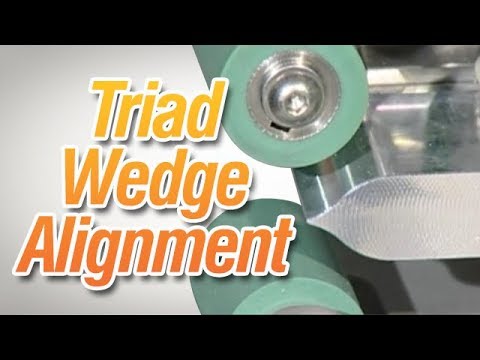
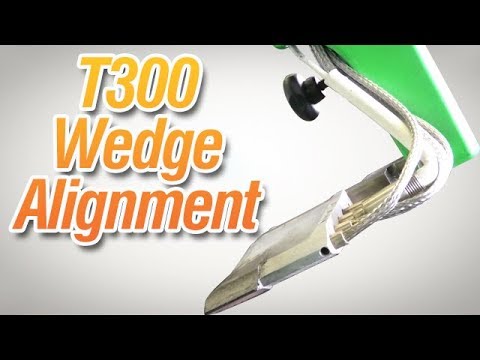
Miller Weldmaster machines die speciaal zijn afgestemd op het verlijmen van acryl, waaronder de T300 Extreme, Triad Extreme en 112 Extreme.
Wat is het lassen van acrylweefsel?
The industrial process of permanently joining two or more pieces of acrylic fabric using a heat-activated adhesive tape, applied through a controlled welding machine. The result is a seam that is fully sealed, weather-resistant, and structurally superior to traditional sewn seams for most outdoor and marine applications.
Unlike PVC or polyurethane fabrics that melt and re-fuse under direct heat, acrylic fabric needs a heat-activated adhesive tape as the bonding agent — not raw heat — to create a permanent seam. Understanding this distinction is the starting point for anyone selecting a machine or setting process parameters for acrylic production.
Waarom acrylweefsel niet op dezelfde manier kan worden gelast als PVC
The core technical distinction: acrylic is a woven synthetic fiber, not a thermoplastic film. PVC and polyurethane fabrics melt under heat and re-fuse when pressure is applied — that is what direct thermoplastic welding exploits. Acrylic fabric does not behave this way. Apply direct heat without an adhesive and you risk glazing or scorching the surface without creating any seam bond. This is the most common misunderstanding buyers bring to the conversation, and it matters because it affects machine selection, tape selection, and every process parameter setting in production.
How Acrylic Adhesives Work
Bij het thermische verbindingsproces wordt gebruikgemaakt van gelamineerde kleefband — met aan beide zijden een sterke kleeflaag — die tussen de twee stukken acrylweefsel wordt geplaatst. De lasmachine brengt warmte aan om de lijm te activeren, waarna de verbinding door druk van de verbindingsrollen en -staven wordt gefixeerd. Volg deze volgorde bij elke productierun:
- Position laminated bonding tape between the two acrylic fabric pieces, fully seated within the seam allowance.
- Apply controlled heat via the welding method — hot air, hot wedge or impulse — to activate the adhesive at the correct temperature range for acrylic.
- Apply pressure through bonding rollers and bars to consolidate the seam and ensure full contact between the tape adhesive and both fabric surfaces.
- Allow cooling before handling to achieve full bond strength. Pulling a seam before it has cooled is one of the most common causes of weak seams.
Properties of Acrylic Fabric
Acryl wordt op de markten voor zonwering, scheepsbouw en buitenmeubilair om specifieke prestatieredenen tegen een hogere prijs verkocht. Juist die eigenschappen die het materiaal zo waardevol maken, maken een goede verlijming ook van cruciaal belang — een gebrekkige naad in een acrylproduct heeft niet alleen gevolgen voor het productieproces, maar ook voor de prestaties van de stof zelf.
- UV-bestendigheid: bestand tegen verkleuring en aantasting van het oppervlak door langdurige blootstelling aan de zon — de belangrijkste reden waarom fabrikanten van zonwering en scheepsdoeken dit materiaal aanbevelen.
- Vochtafvoer: voert vocht af van het oppervlak zonder het op te nemen, waardoor de structurele integriteit in natte omgevingen behouden blijft.
- Olie- en chemicaliënbestendigheid: presteert betrouwbaar in industriële en maritieme omgevingen waar verontreinigende stoffen aanwezig zijn.
- Hoge treksterkte en rekbestendigheid: houdt de spanning in luifelframes en schaduwconstructies vast zonder uit te rekken of door te hangen.
- Weersbestendigheid buitenshuis: behoudt zijn structurele integriteit bij extreme temperaturen, van koude winteropslag tot blootstelling aan de volle zomerzon.
Acrylic Fabric Bonding Methods: Comparing Hot Air, Hot Wedge and Impulse Welding
Choosing the right bonding method for acrylic fabric comes down to three variables: your production volume, your typical seam geometry, and the weight of the acrylic material you run. Each method activates the same heat-activated adhesive tape — what differs is how the heat is delivered and how fast the machine can move through a seam. The table below maps each method to the production context it serves best.
The most important thing to understand about the table below: none of these methods involve melting the acrylic fabric itself. Every row describes a mechanism for activating the adhesive tape. The fabric stays intact. The bond forms between the tape and the fabric surface, not between two fabric surfaces fused together.
Machine Settings for Acrylic Bonding: Temperature, Pressure, and Speed
Acrylic fabric requires a lower heat band than vinyl or PVC. The exact range depends on the specific acrylic blend and coating weight, but the guiding principle holds across materials: if you can see surface glazing on the fabric face, the temperature is too high. Reduce heat before increasing speed to compensate.
De snelheid is van belang omdat de verblijftijd – de tijd dat de stof op het hechtpunt aan warmte wordt blootgesteld – rechtstreeks bepaalt hoeveel energie de lijm opneemt. Als je bij de juiste temperatuur te snel werkt, wordt de lijm onvoldoende geactiveerd. Als je bij de juiste temperatuur te langzaam werkt, loop je het risico dat de stof verschroeit. De juiste balans vind je door een proefnaad te maken, niet door een berekening.
De drukinstellingen zijn van invloed op hoe goed de geactiveerde lijm hecht aan beide stofoppervlakken. Bij te weinig druk ontstaat er onvolledige hechting, vooral langs de naadranden. Te veel druk op lichtgewicht acrylcanvas kan het weefsel vervormen en leiden tot cosmetische onvolkomenheden in de eindproducten.
Voer, voordat u met de productie van een nieuwe partij stof begint — of na elke wijziging in de machine-instellingen — een proefnaad uit op een reststuk van hetzelfde materiaal en voer een afpeltest uit voordat u definitief verdergaat. De toepassingsspecialisten Miller Weldmaster kunnen u adviseren over de startparameters voor uw specifieke stof en machinemodel.
| Methode | Hoe het werkt | Het beste voor | Snelheid | Belangrijkste overweging |
|---|---|---|---|---|
| Hete lucht lassen | Controlled hot air stream activates adhesive tape between fabric layers | Rechte naden, productie van luifels in middelgrote tot grote hoeveelheden | Matig tot snel | Temperatuurregeling is cruciaal — bij een te hoge temperatuur ontstaat er een glanslaag op het acryl |
| Heet wiglassen | Verwarmde metalen wiggen komen rechtstreeks in contact met de stoflagen om de tape te activeren | Lange, doorlopende naden op zwaarder acrylcanvas | Snel voor ononderbroken gebruik | Vereist een nauwkeurige uitlijning van de wiggen; langzamere instelling bij kleine oplagen |
| Impulslassen | Een korte, gecontroleerde warmtepuls door het afdichtingselement zorgt ervoor dat de tape hecht | Kortere naadlengtes, werkplaatsen met een lager volume, uiteenlopende naadvormen | Langzamer per cyclus, flexibel | Een constante verblijftijd is essentieel voor een reproduceerbare naadsterkte |
Acrylic Fabric Bonding vs. Sewing: Why Industrial Manufacturers Are Making the Switch
Sewing has been the standard joining method for acrylic canvas for decades. It works — up to a point. At production scale, and across the service life of outdoor and marine products, three specific failure modes consistently push fabricators toward bonded seams. Understanding each one helps explain why the switch from sewing to bonding is not just a process upgrade but a warranty and quality management decision.
The Hidden Costs of Sewing Acrylic: Thread Fade, Needle Holes, and Rework
Het verbleken van garen is de eerste manier waarop het product defect raakt. Acrylstof is ontworpen om UV-straling te weerstaan — het behoudt zijn kleur en structuur zelfs na jarenlange blootstelling aan direct zonlicht. Garen is dat niet. Het polyester- of nylongaren dat wordt gebruikt om acrylzeil te naaien, verslijt sneller dan de stof zelf. Het resultaat is een opvallend contrast: verbleekt garen dat door intacte stof loopt. Voor zonneschermbedrijven met garantieverplichtingen is het verbleken van garen een reden voor terugroepacties, en niet alleen een cosmetisch probleem.
Lekken door naaldgaatjes vormen de tweede manier waarop het product defect kan raken. Elke steek zorgt voor een gaatje in de stof. Als de draad nieuw en nog intact is, vult deze het gaatje op en blijft de waterdichtheid redelijk behouden. Naarmate de draad door blootstelling aan UV-straling verzwakt, gaan de gaatjes openstaan. Water dringt dan binnen langs de naadlijn — precies de manier waarop een outdoor- of maritiem product is ontworpen om dit te voorkomen.
Rework costs compound both problems. Re-sewing an acrylic seam requires removing the old thread, resetting the sewing machine, and running the seam again — with a real risk that the needle holes from the first pass compromise the repair. Running the same seam through a bonding machine after initial validation takes a fraction of the time. At production scale, the labor differential adds up to a meaningful cost per linear foot.
Hechtsterkte: wat gelijmd acryl biedt ten opzichte van naaien
The industry benchmark for awning and marine seams is 60–80% of base fabric tensile strength. A seam below that range is a warranty risk; a seam at or above it holds for the product's expected service life. Properly bonded acrylic seams with correctly specified heat-activated tape consistently reach this benchmark — and maintain it throughout the product's life because the bond is not subject to UV degradation the way thread is.
Naadverbindingen kunnen in het begin een vergelijkbare sterkte hebben. Het verschil wordt pas na verloop van tijd duidelijk. Naarmate het garen verslijt, neemt de sterkte van de naad af. Bij een gelijmde naad treedt die verslechtering niet op. Voor fabrikanten die hun producten met een meerjarige garantie ondersteunen, is de gelijmde naad de optie met het laagste risico.
| Issue | Genaaide acrylnaden | Verlijmde acrylnaden |
|---|---|---|
| Waterdichtheid van de naad | Aangetast door naaldgaatjes; verslechtert na verloop van tijd door blootstelling aan UV-straling | Fully sealed seam — no needle holes, watertight throughout service life |
| De kleur vervaagt na verloop van tijd | De draad verliest zijn kleur en sterkte voordat de stof het begeeft | Geen stiknaad — het uiterlijk van de naad gaat net zo lang mee als de stof |
| Lekken door naaldgaatjes | Elke steek is een scheurtje; het wordt erger naarmate de draad verslijt | Eliminated — adhesive tape fills and seals the seam line |
| Productiesnelheid | Arbeidsintensief; afhankelijk van de vaardigheid van de operator en het inrijgen van de machine | Constante doorvoer; de machine-instellingen zorgen voor een herhaalbaar resultaat |
| Percentage herbewerking van naden | Het opnieuw naaien kost veel tijd en kan het vervangen van de stof noodzakelijk maken | Als de procesparameters correct zijn ingesteld, is er nauwelijks nabewerking nodig |
| Arbeidskosten per strekkende meter | Hoger — kosten voor garen, naaldwisselingen, stilstandtijd van de operator | Op productieschaal terugschroeven zodra de instellingen zijn gevalideerd |
Toepassingsgebieden van het verlijmen van acrylweefsel — Sectoren en toepassingen
De sectoren die acrylcanvas gebruiken, hebben één ding gemeen: langdurige blootstelling aan UV-straling, vocht en mechanische belasting. Juist onder die omstandigheden komen de zwakke punten van genaaide naden het sterkst naar voren — en zijn gelijmde naden van onschatbare waarde. Hieronder staan de belangrijkste sectoren Miller Weldmaster met oplossingen voor het verlijmen van acryl.
Zonweringen en schaduwconstructies
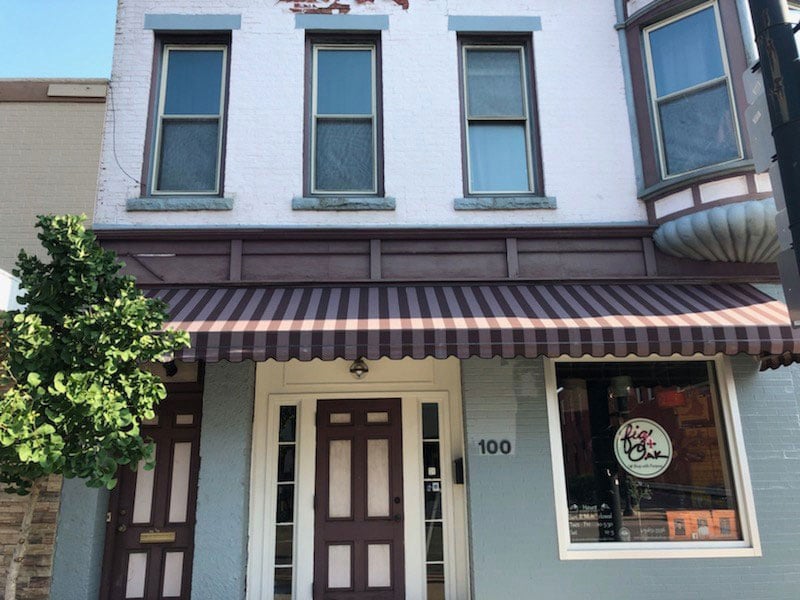
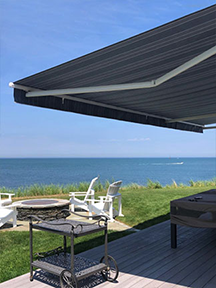
Awning fabrication is one of the main applications for acrylic fabric bonding. A commercial awning stays under UV and rain load for years before it is replaced, and sewn seams often show thread fade and needle hole leaks long before the fabric itself fails, which leads to customer callbacks and warranty claims.
Bonded seams address both failure modes. The awning keeps sealed seams through its service life, the fabricator handles fewer callbacks, and seam quality becomes a selling point when bidding commercial projects. See how four Miller Weldmaster machines transformed production at Lehr Awning in our acrylic awning case study.
Zeildoek en bootafdekkingen
Bij maritieme toepassingen komen zout water en voortdurende buigbewegingen nog eens bovenop de blootstelling aan UV-straling en vocht waarmee luifels al te maken hebben. Deze omstandigheden versnellen de slijtage van de garens sneller dan welke andere omgeving dan ook — een genaaid product van maritiem canvas kan al binnen één vaarseizoen lekken in de naden vertonen onder omstandigheden met veel UV-straling en zoutnevel.
Bonded seams maintain watertight integrity across the flex cycles and chemical exposure that marine environments impose. Bimini tops, boat covers, and dodgers are the most common marine products where fabricators make the switch from sewing to bonding — and where the quality difference is most visible to the end customer.
Vrijetijdsartikelen en tuinmeubilair
Overtrekken voor terrasmeubilair, parasolhoezen en kussenhoezen voor buiten worden net als markiezen blootgesteld aan UV-straling en vocht, maar moeten daarnaast ook voldoen aan esthetische eisen vanuit de consument. De naad is zichtbaar. Bij genaaide naden op hoogwaardige tuinmeubelproducten vertonen de draden verkleuring en zijn de steken ongelijkmatig, wat bij de koper de indruk wekt dat er kwaliteitsproblemen zijn, ongeacht of de naad daadwerkelijk is gescheurd.
Gelijmde naden zien er strak uit — geen zichtbare stiklijn, geen verkleuring van de draad. Voor fabrikanten die hun producten in het topsegment van de markt voor outdoor-vrijetijdsartikelen positioneren, is het esthetische voordeel van gelijmde naden commercieel gezien net zo belangrijk als het structurele voordeel.
Gespecialiseerde industriële toepassingen
Beyond traditional outdoor and marine applications, acrylic fabric bonding serves filtration bags, protective covers, and custom industrial enclosures where chemical resistance and seam integrity under mechanical stress are non-negotiable requirements. In these applications, a sewn seam is often disqualified from the specification outright — the perforation risk is incompatible with the containment requirement. Bonded acrylic seams provide the fully sealed surface these applications demand.
Choosing the Right Machine for Acrylic Fabric Bonding
Welke machine het meest geschikt is voor uw bedrijf, hangt af van drie factoren: hoeveel u per ploeg produceert, welke naadvormen uw producten vereisen en hoe zwaar het acrylweefsel is dat u verwerkt. In het onderstaande overzicht worden deze factoren in kaart gebracht aan de hand van de machinecategorieën Miller Weldmaster . Beschouw dit als een uitgangspunt voor het gesprek met een toepassingsspecialist — niet als een definitieve specificatie.
Match the Machine to Your Production Volume
Kleinschalige activiteiten en kleine bedrijven
For shops bonding shorter runs, varied seam geometries, or a wide mix of acrylic products, impulse welding is typically the right starting point. The lower capital cost matches the production profile, and the flexibility to handle different seam lengths without major setup changes suits shops where no two jobs are identical.
Output profile: impulse machines handle seam lengths from a few inches to several feet, with cycle times that match manual-feed production paces. The key process variable is dwell time — the duration of the heat pulse. Getting that right for your specific tape and fabric combination is a one-time calibration that then produces consistent seams across the run.
Fabrikanten van middelgrote markiezen en scheepsdoeken
Awning shops and marine canvas fabricators producing at mid-volume — regular production schedules, consistent fabric weights, and long continuous seam requirements — are the natural fit for hot air and hot wedge welding machines. Continuous seam production at consistent speeds is where these machines outperform impulse alternatives on a cost-per-linear-foot basis.
The T300 Extreme and 112 Extreme are Miller Weldmaster's purpose-built solutions for this production profile. Both are calibrated for acrylic bonding — the temperature range, pressure systems, and feed mechanisms are designed for the lower heat requirements and precise speed control that acrylic fabric demands.
Productielijnen voor grote volumes en geautomatiseerde productielijnen
Manufacturers producing at scale — where the cost of machine downtime and seam rework is measured in production hours, not individual jobs — need machines with higher throughput and automation capability. High-speed hot air and hot wedge machines and automated bonding systems address that requirement.
The Triad Extreme and Miller Weldmaster's custom automation options serve this segment. The focus at this production level is not just machine capability but system integration: how the bonding station fits into the broader production line, what upstream and downstream handling looks like, and how quality control is built into the process rather than applied after it.
Veelvoorkomende problemen bij het verlijmen van acryl — en hoe je deze kunt voorkomen
Bij acrylaatverlijming ontstaan er altijd sterke verbindingen als de procesparameters correct zijn ingesteld. Als dat niet het geval is, is het probleem vrijwel altijd terug te voeren op een van de volgende drie oorzaken: te veel warmte, onvoldoende druk of inconsistente instellingen tijdens een productierun. Elk van deze problemen is te voorkomen.
Failure Mode 1: Surface Glazing or Scorching
Surface glazing occurs when the temperature setting is too high for the specific acrylic fabric being bonded. Acrylic coatings — particularly the solution-dyed finishes used on premium awning and marine canvas — are sensitive to excess heat. Glazing affects both seam appearance and bond strength, because the adhesive on the tape may over-activate and lose structural integrity before the seam is set.
Prevention: Run a test seam at the lower end of your temperature range before committing to a production run on any new fabric lot. If glazing appears, reduce temperature before increasing speed. Slower speed at a lower temperature is consistently more reliable than faster speed at a higher one for acrylic materials.
Failure Mode 2: Peel Failure at the Seam Edge Due to Surface Energy
Edge peel is the result of insufficient pressure during bonding, or adhesive tape that was not fully seated within the seam allowance before heat was applied. The center of the seam may bond correctly while the edges lift — a failure that becomes visible immediately on peel testing or, worse, in the field after installation.
Prevention: Verify tape placement before feeding material through the machine. Confirm pressure roller settings are within the recommended range for the fabric weight. After the first seam of any production run, conduct a 10-minute peel test — pull the seam apart by hand at the edge — before continuing. If the edge peels cleanly, adjust before proceeding.
Failure Mode 3: Bonding Inconsistency Across a Production Run
Run-to-run inconsistency is the hardest failure mode to diagnose because individual seams may look acceptable while aggregate seam strength varies. The two most common causes are machine settings that drift over a long production run — particularly temperature, which can creep as the machine reaches thermal equilibrium — and fabric lot variation, where different coating weights or acrylic blends require different parameter settings.
Prevention: Calibrate machine settings at the start of each shift, not just at initial setup. When switching to a new material lot, treat it as a new material — run a test seam and validate before full production. Sample seam strength testing throughout a run (not just at the beginning) catches drift before it becomes a quality issue. Miller Weldmaster's service and training programs cover production calibration protocols for each machine model.
Als uw stof niet in de lijst aan de linkerkant staat, neem dan contact met ons op en vertel ons wat u nodig hebt voor het lassen van stoffen.